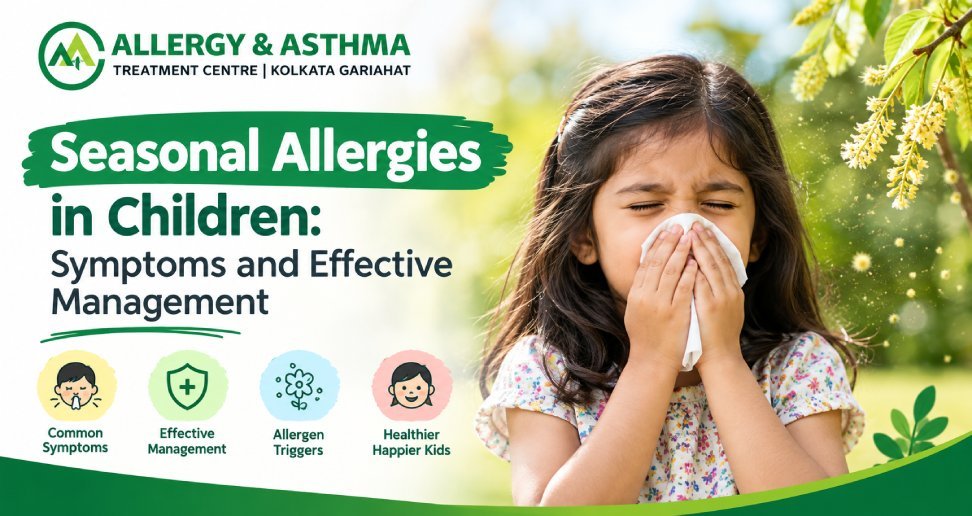
Seasonal allergies are common in children and can become particularly troublesome during periods when pollen levels are high. A child who frequently sneezes, has a runny or blocked nose, itchy eyes, or develops a cough during certain months may be experiencing seasonal allergies. These symptoms can affect sleep, concentration, outdoor activities, and overall comfort.
Seasonal allergies occur when the immune system reacts to normally harmless substances such as pollen from trees, grasses, or weeds. Understanding the symptoms, triggers, prevention methods, and available treatments can help parents manage allergies more effectively and support their child’s daily well-being.
What Are Seasonal Allergies in Children?
Seasonal allergies, also called seasonal allergic rhinitis or hay fever, happen when a child’s immune system identifies airborne allergens as a threat. The body releases chemicals such as histamine, which can cause inflammation and allergy symptoms.
Unlike a common cold, seasonal allergies are usually connected to specific environmental triggers and may continue for weeks or recur during the same season each year.
Common triggers include:
- Tree pollen during spring
- Grass pollen during late spring and summer
- Weed and ragweed pollen during late summer and autumn
- Outdoor mold spores in certain weather conditions
Children who spend considerable time outdoors may notice stronger symptoms when pollen counts are high.
Common Symptoms of Seasonal Allergies in Children
Seasonal allergy symptoms can vary from one child to another. Some children may experience mild discomfort, while others can have symptoms that interfere with normal activities.
Common symptoms include:
- Frequent sneezing
- Runny or stuffy nose
- Itchy nose or throat
- Watery, red, or itchy eyes
- Postnasal drip
- Coughing
- Nasal congestion
- Dark circles under the eyes
- Fatigue or difficulty sleeping
- Increased mouth breathing
Some children may also experience worsening asthma symptoms when exposed to pollen. If a child develops breathing difficulty, wheezing, or significant swelling, parents should seek medical attention promptly.
How to Manage Seasonal Allergies in Children?
Managing seasonal allergies usually involves reducing exposure to triggers and controlling symptoms. The right approach depends on the child’s age, symptoms, allergy triggers, and overall health.
1. Reduce Pollen Exposure
Try to keep windows closed when pollen levels are particularly high. Air conditioning can help maintain a more controlled indoor environment. After outdoor activities, encourage children to wash their hands, face, and hair and change their clothes to remove pollen.
2. Keep Bedrooms Clean
Pollen can enter the home on clothing, shoes, and hair. Regular cleaning can help reduce allergens indoors. Washing bedding regularly and keeping children’s sleeping areas clean may also improve comfort.
3. Use Saline Nasal Rinses
For some children, saline sprays or rinses can help clear allergens and mucus from the nasal passages. Parents should use age-appropriate products and follow appropriate instructions.
4. Follow Medical Advice
If symptoms are frequent or interfere with school, sleep, or daily activities, consult a pediatrician or allergy specialist. Depending on the child’s condition, a doctor may recommend antihistamines, nasal corticosteroid sprays, or other treatments.
How Can I Prevent Seasonal Allergies?
Seasonal allergies cannot always be completely prevented, particularly when a child is sensitive to pollen. However, reducing exposure can decrease the frequency and severity of symptoms.
Parents can take several practical steps:
- Check local pollen forecasts when planning outdoor activities.
- Keep windows and doors closed during periods of high pollen.
- Encourage children to shower after playing outside.
- Wash outdoor clothes regularly.
- Avoid drying clothes outdoors during high-pollen periods.
- Keep pets clean if they spend significant time outdoors.
- Use appropriate air filtration at home when recommended.
- Keep children away from areas with freshly cut grass when symptoms are easily triggered.
- Start preventive treatment according to a doctor’s advice before predictable allergy seasons when appropriate.
The goal is not to eliminate every possible exposure but to reduce the overall amount of allergen reaching the child’s body.
What Are Some Effective Treatments for a Severe Pollen Allergy?
When pollen allergies are severe, lifestyle measures alone may not provide enough relief. A healthcare professional can assess the child’s symptoms and recommend appropriate treatment.
Antihistamines
Antihistamines can help control symptoms such as sneezing, itching, and a runny nose. Some newer antihistamines are less likely to cause drowsiness, but medication should be selected based on the child’s age and medical needs.
Nasal Corticosteroids
Nasal corticosteroid sprays are commonly used for allergic rhinitis and can reduce inflammation and congestion. They generally work best when used correctly and consistently as advised by a healthcare professional.
Eye Drops
If itchy and watery eyes are a major problem, an appropriate allergy eye drop may help relieve symptoms. A doctor or pharmacist can recommend a suitable option for children.
Allergy Immunotherapy
For children with significant, persistent allergies that do not respond adequately to standard treatments, an allergy specialist may consider immunotherapy. This treatment gradually exposes the immune system to a specific allergen under medical supervision.
Immunotherapy is not suitable for every child, so an allergy specialist should determine whether it is appropriate.
What Is the Most Effective Treatment for Seasonal Allergies?
There is no single treatment that is considered the most effective for every child. Treatment depends on the child’s symptoms, age, triggers, severity, and response to previous treatments.
For many children, a combination of trigger avoidance and appropriate medication provides effective symptom control. Nasal corticosteroids are often particularly effective for nasal allergy symptoms, while antihistamines can help with sneezing and itching.
Children with persistent or severe allergies may benefit from evaluation by an allergy specialist. Allergy testing can sometimes help identify specific triggers and guide a personalized management plan.
Parents should avoid giving children allergy medication without checking the appropriate dose, age recommendations, and possible interactions with other medicines.
When Should Parents See a Doctor?
Occasional mild allergy symptoms may be managed with environmental precautions and advice from a healthcare professional. However, medical evaluation is recommended when symptoms are persistent, severe, or affecting a child’s quality of life.
Parents should consider consulting a doctor if:
- Symptoms interfere with sleep or school.
- Nasal congestion continues for an extended period.
- Allergy symptoms repeatedly return during a particular season.
- The child experiences wheezing or breathing difficulties.
- Over-the-counter treatments do not provide adequate relief.
- Symptoms are difficult to distinguish from asthma, infection, or another condition.
A healthcare professional can help identify the cause of symptoms and develop an age-appropriate treatment plan.
Conclusion
Seasonal allergies in children can make certain times of the year uncomfortable, but effective management can significantly reduce their impact. Recognizing symptoms early, minimizing pollen exposure, maintaining a clean indoor environment, and following appropriate medical advice are important steps for managing allergies.
For children with frequent or severe symptoms, professional evaluation can help identify triggers and determine whether medications or specialized treatments such as immunotherapy may be appropriate. With the right combination of prevention and treatment, children with seasonal allergies can continue to participate comfortably in school, outdoor activities, and everyday life.