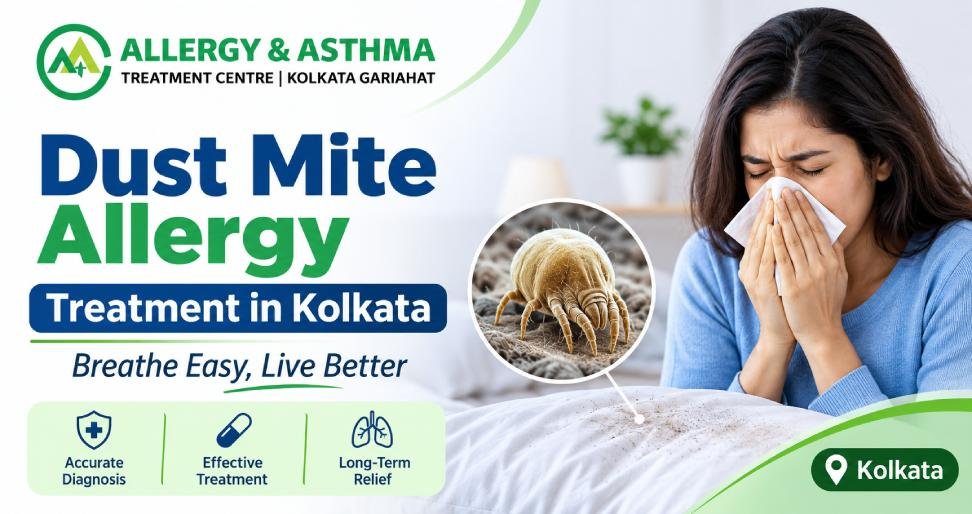
Dust mite allergy is a common allergic condition that can affect people of all age groups. Many people experience frequent sneezing, a blocked nose, watery eyes, coughing or breathing difficulties, especially when cleaning their homes, changing bedsheets or waking up in the morning. These symptoms may sometimes be mistaken for a common cold, but they can be signs of dust mite allergy.
In a city like Kolkata, indoor dust, humidity and poorly ventilated spaces can create favourable conditions for dust mites. These microscopic organisms are commonly found in mattresses, pillows, carpets, curtains and upholstered furniture. Although dust mites do not bite, their waste particles and body fragments can trigger allergic reactions in sensitive individuals.
If you are experiencing recurring allergy symptoms, understanding the causes and exploring appropriate dust mite allergy treatment in Kolkata can help you manage the condition effectively. The Allergy Asthma Treatment Center provides a specialised setting where individuals can seek professional guidance for allergy-related concerns.
What Is Dust Mite Allergy?
Dust mite allergy is an allergic reaction caused by exposure to proteins present in dust mite waste particles and body fragments. Dust mites are tiny organisms that are not visible to the naked eye. They mainly survive by feeding on dead skin cells shed by humans and pets.
These organisms commonly live in:
- Mattresses and pillows
- Bedsheets and blankets
- Carpets and rugs
- Curtains and upholstered furniture
- Soft toys and cushions
- Dusty corners and storage areas
When a person with an allergy inhales these particles, their immune system may identify them as harmful substances and release chemicals such as histamine. This reaction can lead to symptoms affecting the nose, eyes, skin and respiratory system.
Common Symptoms of Dust Mite Allergy
Dust mite allergy symptoms can vary depending on a person’s sensitivity and level of exposure. Some individuals experience mild nasal irritation, while others may develop persistent respiratory symptoms.
Here are some common symptoms to watch for:
1. Frequent Sneezing
Repeated sneezing, particularly after waking up or while cleaning the bedroom, can be a possible sign of dust mite allergy.
2. Runny or Blocked Nose
An allergic reaction may cause nasal congestion, a watery discharge and difficulty breathing comfortably through the nose.
3. Itchy and Watery Eyes
Exposure to dust mite allergens can cause eye irritation, redness, itching and excessive watering.
4. Persistent Coughing
Some people experience repeated coughing, especially at night or early in the morning.
5. Breathing Difficulties
Dust mite exposure can trigger asthma symptoms in sensitive individuals, including wheezing, chest tightness and shortness of breath.
6. Skin Irritation
In some individuals, allergic conditions may be associated with itchy skin or worsening eczema.
If these symptoms occur frequently or interfere with your sleep and everyday activities, consider consulting an allergy specialist for proper evaluation.
What Causes Dust Mite Allergy in Kolkata?
Kolkata’s climatic conditions, particularly its humid weather during the monsoon, can contribute to dust mite growth. Indoor environments that retain moisture and accumulate dust may provide suitable conditions for these organisms.
Some common factors that increase exposure include:
- High Indoor Humidity: Dust mites thrive in humid environments, particularly when indoor humidity remains high.
- Unclean Bedding: Mattresses, pillows and blankets can accumulate dust mite allergens over time.
- Poor Ventilation: Rooms with limited airflow may retain dust and moisture.
- Carpets and Curtains: Fabric materials can collect dust and provide suitable hiding places for mites.
- Soft Furnishings: Cushions, upholstered sofas and stuffed toys may accumulate allergens.
Understanding these triggers is an important step towards managing dust mite allergy.
How Is Dust Mite Allergy Diagnosed?
Identifying the exact cause of recurring allergy symptoms is important for choosing an appropriate treatment approach. An allergy specialist may recommend different diagnostic methods depending on the patient’s symptoms and medical history.
1. Medical History and Symptom Assessment
The doctor may ask about your symptoms, their frequency, environmental exposure and whether they become worse during specific activities or seasons.
2. Skin Prick Test
A skin prick test may be recommended to check whether your immune system reacts to specific allergens, including house dust mites.
3. Specific IgE Blood Test
This test measures the level of specific IgE antibodies against selected allergens in the blood. It may help identify sensitivity to dust mite allergens.
The doctor will interpret the results alongside your symptoms and medical history because a positive allergy test alone does not always confirm that an allergen is responsible for your symptoms.
Dust Mite Allergy Treatment in Kolkata: Available Treatment Options
There is no single treatment suitable for everyone with dust mite allergy. The management plan depends on symptom severity, medical history and the patient’s response to different treatment approaches.
People looking for professional dust mite allergy treatment in Kolkata may benefit from consulting an experienced allergy specialist.
Common treatment approaches include:
1. Antihistamines
Antihistamine medicines may help reduce symptoms such as sneezing, itching and a runny nose. The appropriate medicine and dosage should be determined by a healthcare professional.
2. Nasal Corticosteroid Sprays
These sprays help reduce inflammation inside the nasal passages and may provide relief from persistent allergic rhinitis symptoms.
3. Saline Nasal Irrigation
Saline rinses may help remove mucus and allergens from the nasal passages. Use sterile, distilled or previously boiled and cooled water for nasal irrigation.
4. Allergy Immunotherapy
For selected patients with confirmed dust mite allergy, an allergy specialist may recommend immunotherapy.
This treatment involves gradually exposing the immune system to controlled amounts of specific allergens to reduce allergic sensitivity over time. It may be administered through:
- Subcutaneous Immunotherapy (SCIT)
- Sublingual Immunotherapy (SLIT)
Immunotherapy requires proper evaluation and medical supervision. It is not suitable for every patient.
5. Asthma Management
If dust mite exposure triggers asthma symptoms, the doctor may recommend an appropriate asthma management plan, including prescribed inhalers and regular monitoring.
How to Reduce Dust Mite Exposure at Home
Along with medical treatment, reducing exposure to dust mite allergens can help manage symptoms.
Here are some practical steps:
- Wash bedsheets, pillow covers and blankets regularly using hot water where fabric care instructions permit.
- Use allergen-proof covers for mattresses and pillows.
- Maintain indoor humidity below 50% where possible.
- Clean floors using a damp mop instead of dry dusting.
- Reduce unnecessary carpets, heavy curtains and soft furnishings in bedrooms.
- Wash soft toys regularly and keep them away from the bed.
- Use a vacuum cleaner equipped with a HEPA filter.
- Ensure proper ventilation and address dampness or water leakage.
Consistency is important because dust mite allergens can remain in indoor environments even after cleaning.
Why Choose Allergy Asthma Treatment Center in Kolkata?
Managing recurring allergic symptoms requires more than temporary relief. Identifying the underlying triggers and following an appropriate treatment plan can make a meaningful difference in everyday comfort.
Allergy Asthma Treatment Center is a relevant healthcare destination for individuals seeking professional guidance for allergy and asthma-related concerns in Kolkata.
Whether you are experiencing frequent sneezing, nasal congestion, persistent coughing or suspected dust mite allergy, consulting a qualified specialist can help you understand your condition and explore suitable management options.
The centre can be promoted as a destination for individuals looking for:
- Allergy-related consultation and evaluation
- Assessment of recurring allergic symptoms
- Guidance on allergy testing, where appropriate
- Dust mite allergy management
- Allergic rhinitis evaluation
- Asthma-related consultation and management
Patients should discuss their symptoms and medical history with the healthcare professional to understand which diagnostic tests and treatment options are appropriate.
If you are searching online for dust mite allergy treatment near me in Kolkata, consider seeking professional medical advice rather than relying only on over-the-counter medicines.
When Should You Consult an Allergy Specialist?
Occasional sneezing may not always indicate an allergy. However, recurring symptoms should not be ignored, particularly when they affect sleep, work or daily activities.
Consider consulting an allergy specialist if:
- You experience frequent sneezing without an obvious cause.
- Your nose remains blocked for several days or weeks.
- Symptoms become worse when you wake up.
- You experience repeated coughing or wheezing.
- Allergy symptoms interfere with your sleep.
- You have asthma along with suspected dust mite sensitivity.
Seek urgent medical attention if you experience severe breathing difficulty or other signs of a serious allergic reaction.
Conclusion
Dust mite allergy can affect everyday comfort, particularly when exposure continues inside the home. From frequent sneezing and nasal congestion to coughing and asthma symptoms, the condition can affect people differently. Identifying the triggers, reducing indoor allergen exposure and following appropriate medical advice are important parts of managing this allergy.
If you are experiencing recurring symptoms and searching for Dust Mite Allergy Treatment in Kolkata, consider consulting the Allergy Asthma Treatment Center for professional evaluation and guidance. With an appropriate diagnosis and an individualised management plan, patients can take informed steps towards better allergy control and improved quality of life.