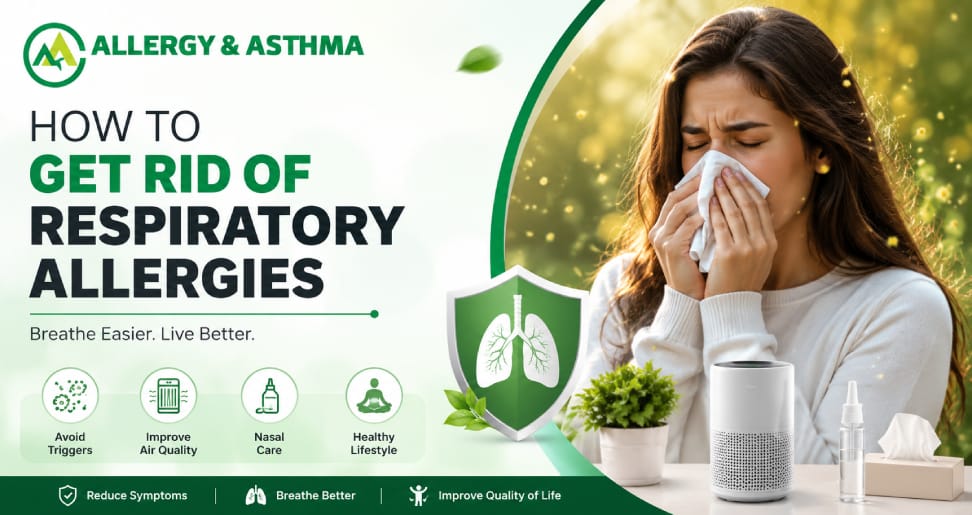
Respiratory allergies are becoming increasingly common due to pollution, dust, pollen, smoke, and changing lifestyles. These allergies can affect people of all ages and often interfere with daily life by causing breathing difficulties, sneezing, coughing, and chest congestion. If left untreated, respiratory allergies may worsen and lead to chronic respiratory conditions such as asthma or sinus infections.
Understanding the causes, symptoms, and treatment options can help you manage the condition effectively. In this blog, we will explain how to get rid of respiratory allergies, discuss common symptoms, preventive measures, and available treatments while highlighting the expert care provided by the Allergy And Asthma Treatment Center.
What is Respiratory Allergy?
A respiratory allergy occurs when the immune system reacts abnormally to airborne substances known as allergens. These allergens are usually harmless to most people, but for sensitive individuals, they trigger allergic reactions in the nose, throat, lungs, or airways.
Common respiratory allergens include:
- Dust mites
- Pollen
- Mold spores
- Pet dander
- Smoke and air pollution
- Strong perfumes or chemicals
When exposed to these allergens, the body releases histamine and other chemicals that cause inflammation in the respiratory tract.
Common Allergic Reaction Symptoms
Recognizing allergic reaction symptoms early is important for proper treatment. Respiratory allergies may present mild to severe symptoms depending on the individual and allergen exposure.
Some common symptoms include:
- Frequent sneezing
- Runny or blocked nose
- Itchy throat or nose
- Persistent coughing
- Wheezing
- Shortness of breath
- Watery or itchy eyes
- Chest tightness
- Fatigue due to breathing discomfort
In severe cases, respiratory allergies can trigger asthma attacks and difficulty breathing, requiring immediate medical attention.
Causes of Respiratory Allergies
Several environmental and genetic factors contribute to respiratory allergies. Some of the major causes include:
1. Air Pollution
Urban pollution contains harmful particles and chemicals that irritate the lungs and nasal passages.
2. Seasonal Changes
Pollen levels rise during specific seasons, especially spring and autumn, increasing allergy symptoms.
3. Indoor Allergens
Dust mites, mold, and pet hair commonly trigger indoor respiratory allergies.
4. Smoking and Passive Smoke
Tobacco smoke irritates the respiratory tract and worsens allergy symptoms.
5. Family History
People with a family history of allergies or asthma are more likely to develop respiratory allergies.
How to Get Rid of Allergies Naturally
Many people search for effective ways on how to get rid of allergies naturally and reduce dependency on medications. While complete elimination may not always be possible, symptoms can be controlled significantly.
Avoid Allergens
The first step is identifying and avoiding allergy triggers. Use air purifiers, clean your home regularly, and avoid exposure to smoke and dust.
Maintain Indoor Hygiene
Wash bedsheets, curtains, and carpets frequently to remove dust mites and allergens.
Stay Hydrated
Drinking enough water helps thin mucus and keeps the respiratory system healthy.
Use Steam Inhalation
Steam inhalation may help clear nasal passages and reduce congestion caused by allergies.
Eat an Immunity-Boosting Diet
Foods rich in Vitamin C, antioxidants, and omega-3 fatty acids may help strengthen immunity and reduce inflammation.
Wear Masks Outdoors
Masks can protect against dust, pollution, and pollen exposure, especially in crowded urban environments.
Medical Treatments for Respiratory Allergies
While lifestyle modifications help, professional medical treatment is often necessary for long-term relief.
Antihistamines
These medications reduce sneezing, itching, and runny nose by blocking histamine release.
Nasal Sprays
Steroid nasal sprays help reduce inflammation and nasal congestion.
Bronchodilators
People experiencing breathing difficulty or wheezing may require inhalers to open the airways.
Allergy Testing
Identifying the exact allergen can help create a targeted treatment plan.
Immunotherapy
Allergy shots or immunotherapy gradually reduce the body’s sensitivity to allergens over time.
The Allergy And Asthma Treatment Center offers advanced diagnosis and personalized treatment plans for patients suffering from chronic respiratory allergies and asthma-related conditions.
Lifestyle Tips to Prevent Respiratory Allergies
Preventive care plays a major role in managing allergies effectively. Here are some practical tips:
Keep Your Surroundings Clean
Dust and vacuum your home regularly to reduce allergen buildup.
Monitor Air Quality
Avoid outdoor activities during high pollution or high pollen days.
Quit Smoking
Smoking significantly worsens respiratory conditions and allergy symptoms.
Improve Ventilation
Good airflow in homes and offices helps reduce indoor allergens and mold growth.
Exercise Regularly
Light physical activity can strengthen lung capacity and improve respiratory health.
Why Professional Allergy Care Matters
Ignoring respiratory allergies may lead to long-term complications such as chronic sinusitis, bronchitis, or asthma. Professional evaluation helps determine the root cause and ensures appropriate treatment.
At the Allergy And Asthma Treatment Center, patients receive comprehensive allergy care, advanced testing, and effective treatment solutions designed to improve respiratory health and overall quality of life.
The center focuses on:
- Accurate allergy diagnosis
- Personalized treatment plans
- Asthma management
- Long-term allergy prevention
- Patient education and lifestyle guidance
Seeking timely medical care can prevent symptoms from becoming severe and improve long-term respiratory wellness.
Conclusion
Respiratory allergies can affect daily life, sleep quality, productivity, and overall health. Understanding what is respiratory allergy, recognizing allergic reaction symptoms, and learning how to get rid of respiratory allergies are essential for effective management.
Simple preventive measures such as maintaining cleanliness, avoiding triggers, and improving immunity can make a significant difference. However, persistent symptoms should never be ignored. Consulting specialists at the Allergy And Asthma Treatment Center can help you receive accurate diagnosis and advanced treatment for lasting relief.
With the right care and lifestyle adjustments, respiratory allergies can be managed successfully, allowing you to breathe easier and live healthier.
Frequently Asked Questions (FAQs) :-
Ans :- Respiratory allergies are treated through allergen avoidance, antihistamines, nasal sprays, inhalers, immunotherapy, and lifestyle modifications. Proper diagnosis by allergy specialists helps identify the most effective treatment plan.
Ans :- Some respiratory allergies may improve over time, especially with proper treatment and reduced allergen exposure. However, many people require ongoing management to control symptoms effectively.
Ans :- Managing lung allergies involves avoiding triggers, using prescribed inhalers or medications, staying hydrated, practicing steam inhalation, and seeking professional treatment for severe symptoms.
Ans :- Complete permanent cure may not always be possible, but allergy symptoms can be controlled effectively with immunotherapy, medical treatment, and long-term lifestyle management.
Have A Look :-