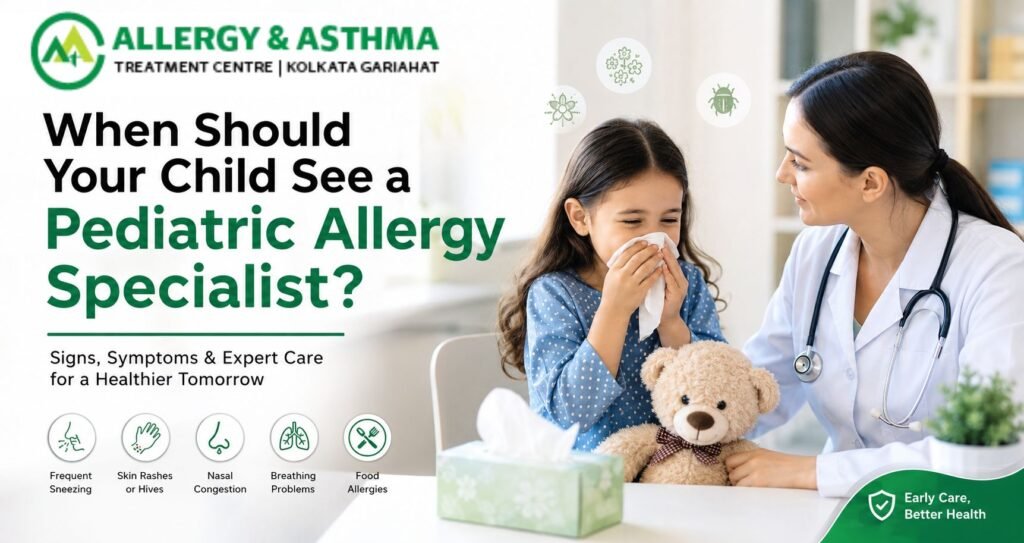
Children can experience sneezing, coughing, skin rashes, breathing problems, or stomach discomfort for many different reasons. Sometimes these symptoms are temporary. But when they keep returning, become difficult to control, or appear after exposure to a particular food, medicine, insect sting, or environmental trigger, parents may wonder: When should your child see a pediatric allergy specialist?
A pediatric allergy specialist can identify possible allergy triggers, recommend appropriate testing, and create a personalized treatment plan. Early evaluation can help children manage symptoms effectively and enjoy everyday activities with greater comfort and confidence.
What Is a Pediatric Allergy Specialist?
A pediatric allergy specialist is a doctor trained to diagnose and manage allergies, asthma, and certain immune-related conditions in children. They evaluate symptoms involving the skin, nose, eyes, lungs, and digestive system.
A specialist may help manage conditions such as:
- Food allergies
- Allergic rhinitis
- Asthma associated with allergies
- Eczema
- Hives
- Drug allergies
- Insect-sting allergies
- Severe allergic reactions
The aim is not only to identify an allergen but also to help parents understand how to manage symptoms, avoid triggers when necessary, and respond appropriately to future reactions.
7 Signs Your Child May Need an Allergy Specialist
1. Allergy Symptoms Keep Coming Back
If your child frequently experiences sneezing, a runny or blocked nose, itchy eyes, or nasal congestion, allergies could be contributing to the symptoms.
Unlike an occasional cold, allergic symptoms can continue for weeks or repeatedly return after exposure to triggers such as dust, pollen, pet dander, or other allergens.
If these symptoms interfere with your child’s sleep, school, concentration, or outdoor activities, discussing them with a pediatrician or allergy specialist can be helpful.
2. Your Child Has Frequent Coughing or Wheezing
Repeated coughing, wheezing, chest tightness, or breathing difficulty may require careful evaluation, particularly when symptoms occur around known allergy triggers.
Allergies and asthma can occur together in some children. Identifying potential triggers may help doctors develop a more effective management approach.
If your child’s asthma symptoms are frequent or difficult to control despite prescribed treatment, ask whether an allergy evaluation is appropriate.
3. Your Child Reacts After Eating Certain Foods
Food allergies can cause symptoms such as:
- Hives or skin redness
- Swelling of the lips or face
- Vomiting
- Abdominal discomfort
- Repeated coughing
- Wheezing
- Throat tightness
- Breathing difficulty
If you notice a repeated reaction after your child eats a particular food, speak with a healthcare professional rather than repeatedly giving the food at home to “test” the reaction.
An allergy specialist can determine whether the history suggests a food allergy and whether further testing is necessary.
4. Your Child Develops Recurrent Hives or Swelling
Hives are raised, itchy skin patches that can appear suddenly. Children may develop hives for several reasons, including infections, medications, foods, insect stings, or other triggers.
If hives repeatedly occur, especially when accompanied by swelling of the lips, face, or other areas, professional evaluation can help identify possible causes.
Keeping a record of what your child ate, touched, took as medication, or encountered before symptoms appeared can also provide useful information during the consultation.
5. Eczema Is Severe or Difficult to Manage
Eczema can cause dry, itchy, irritated, and inflamed skin. While eczema does not automatically mean that a child has a food allergy, some children with persistent or severe eczema may require additional evaluation.
Parents should avoid removing multiple foods from a child’s diet without medical guidance. Unnecessary food restrictions can affect nutrition and may not address the actual cause of the symptoms.
An allergy specialist can assess whether allergy testing is appropriate based on your child’s symptoms and medical history.
6. Your Child Has a Reaction to Medicine or an Insect Sting
A reaction following a medicine or insect sting can be frightening for parents. Symptoms may include skin rashes, hives, swelling, coughing, vomiting, or breathing problems.
If your child has experienced a significant or unusual reaction, an allergy specialist can help determine whether an allergy is suspected and provide guidance about future exposure.
This can be particularly important when a medication may be needed again in the future.
7. Allergies Are Affecting Your Child’s Daily Life
Allergies can affect more than physical comfort. Persistent symptoms may interfere with:
- Sleep
- School performance
- Concentration
- Sports and physical activity
- Outdoor play
- Social activities
- Overall quality of life
If your child’s symptoms continue despite routine treatment or the cause remains unclear, specialist assessment may provide a clearer diagnosis and management plan.
When Is an Allergic Reaction an Emergency?
Some allergic reactions can become life-threatening. Parents should seek emergency medical care immediately if a child develops serious symptoms such as difficulty breathing, significant throat or tongue swelling, fainting, severe dizziness, or rapidly progressing symptoms after suspected allergen exposure.
Do not wait for a routine pediatric allergy appointment during a suspected medical emergency.
Families of children with known severe allergies should follow the emergency plan provided by their healthcare professional and keep prescribed emergency medication available as advised.
What Happens During a Pediatric Allergy Consultation?
A pediatric allergy appointment usually begins with a detailed discussion about your child’s symptoms and medical history.
The specialist may ask:
- When did the symptoms begin?
- How frequently do they occur?
- What happens before a reaction?
- Are specific foods or environments associated with symptoms?
- What medications have been tried?
- Has your child experienced asthma or breathing symptoms?
- Is there a family history of allergies or asthma?
Depending on the clinical history, the specialist may recommend appropriate allergy testing. Testing can include skin testing or blood testing, depending on the suspected condition.
Importantly, allergy test results should be interpreted together with the child’s symptoms and medical history rather than considered in isolation.
Does Every Child With Allergies Need to See a Specialist?
Not necessarily. Mild and occasional allergy symptoms can often be initially managed by a pediatrician.
However, specialist evaluation may be particularly useful when symptoms are persistent, severe, recurrent, unexplained, difficult to control, or associated with suspected food, medication, or insect-sting allergies.
A specialist can also help families understand which triggers genuinely need to be avoided and prevent unnecessary dietary or lifestyle restrictions.
FAQs:
When should I take my child to an allergy specialist?
Consider consulting an allergy specialist when your child’s symptoms repeatedly return, are difficult to control, interfere with daily life, or occur after exposure to a suspected allergen.
How can I tell whether my child’s symptoms are allergies or a cold?
Allergies may cause recurring sneezing, itchy eyes, congestion, or symptoms associated with particular environmental triggers. Colds are generally caused by infections and often resolve within a limited period. Because symptoms can overlap, professional assessment may be needed.
Can children outgrow allergies?
Some childhood allergies can change or resolve over time, depending on the specific allergy and the individual child. Parents should consult a healthcare professional before assuming that an allergy has disappeared.
Does every child need an allergy test?
No. Allergy testing is generally recommended when a child’s symptoms and medical history indicate that testing could provide useful information. An allergy specialist can determine which test, if any, is appropriate.
Get Expert Allergy & Asthma Care for Your Child
If your child frequently experiences allergy symptoms, recurrent wheezing, food reactions, hives, eczema, or unexplained allergic symptoms, getting the right medical evaluation can make a significant difference.
At Allergy & Asthma Treatment Centre, children can receive specialized evaluation and personalized guidance for allergy and asthma-related concerns. Instead of guessing the trigger or repeatedly managing symptoms on your own, speak with a qualified healthcare professional about the best approach for your child.
Concerned about your child’s recurring allergy or asthma symptoms? Contact Allergy & Asthma Treatment Centre today to schedule a consultation and take the first step toward better symptom management and healthier everyday living.
Read More: