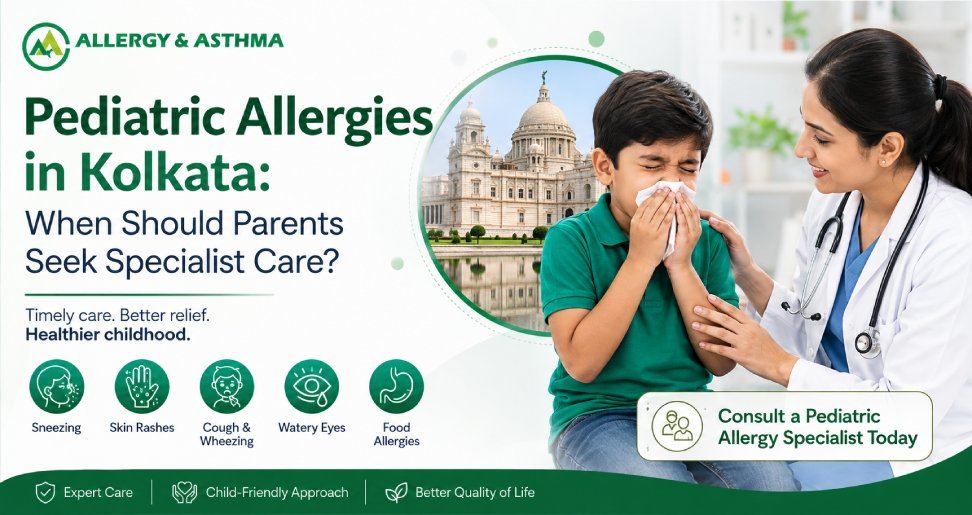
Children can develop allergies at any age, and symptoms may sometimes be mistaken for common seasonal infections, weather-related problems, or repeated colds. In a city like Kolkata, where children may be exposed to dust, air pollution, pollen, changing weather conditions, and indoor allergens, allergic conditions can become a recurring concern for parents.
Pediatric allergies in Kolkata may affect the skin, nose, eyes, respiratory system, or digestive system. While occasional mild symptoms may not always require specialist care, persistent, severe, or recurring symptoms should be evaluated by a qualified allergy specialist. Early diagnosis can help identify triggers and develop a suitable treatment plan that allows children to participate comfortably in school, sports, and everyday activities.
What Are Pediatric Allergies?
Pediatric allergies occur when a child’s immune system reacts excessively to a substance that is usually harmless to most people. These substances, known as allergens, can include house dust mites, pollen, pet dander, mold, certain foods, insect stings, and some medications.
When the body encounters a trigger, it may release chemicals such as histamine, leading to symptoms such as sneezing, itching, rashes, watery eyes, coughing, or breathing difficulties.
Allergic conditions in children can include:
- Allergic rhinitis
- Food allergies
- Atopic dermatitis or allergic eczema
- Asthma associated with allergies
- Allergic conjunctivitis
- Certain medication allergies
- Insect-sting allergies
Recognizing the pattern of symptoms is an important first step toward appropriate care.
Common Signs of Allergies in Children
Allergy symptoms can vary depending on the trigger and the child’s individual sensitivity. Some children may experience only one or two symptoms, while others may have multiple symptoms at the same time.
Common signs include:
- Frequent sneezing or a constantly runny nose
- Nasal congestion or difficulty breathing through the nose
- Persistent itching of the nose, eyes, or throat
- Red, watery, or itchy eyes
- Recurrent skin rashes or hives
- Dry, itchy, inflamed skin
- Repeated coughing, especially at night or during physical activity
- Wheezing or shortness of breath
- Symptoms that repeatedly return after exposure to a particular substance
- Reactions after eating specific foods
If these symptoms occur frequently or interfere with a child’s normal routine, parents should consider professional evaluation.
When Should Parents Seek Specialist Care?
Not every allergic symptom requires an immediate specialist consultation. However, certain patterns should encourage parents to seek expert advice.
1. Symptoms Keep Coming Back
If your child repeatedly experiences sneezing, congestion, coughing, skin rashes, or watery eyes despite routine treatment, an underlying allergy may need to be investigated.
Recurring symptoms can indicate ongoing exposure to a trigger in the home, school, or outdoor environment.
2. Allergies Affect Sleep or School Activities
Allergies can make it difficult for children to sleep comfortably. Nasal congestion, coughing, itching, or breathing problems may cause disturbed sleep and daytime tiredness.
If symptoms affect concentration, school attendance, physical activity, or overall quality of life, specialist assessment may be beneficial.
3. Your Child Has Breathing Problems
Coughing and wheezing should not always be dismissed as a simple allergy or seasonal cold. Children with recurring respiratory symptoms may require evaluation for asthma or allergy-related airway problems.
Parents looking for an Asthma Doctor near me should consider consulting a qualified specialist when a child’s cough, wheezing, chest tightness, or breathing difficulty occurs repeatedly.
4. Symptoms Are Triggered by Certain Foods
Food-related allergic reactions deserve particular attention. Symptoms may include hives, swelling, vomiting, abdominal discomfort, coughing, wheezing, or breathing difficulty after eating a particular food.
Parents should avoid experimenting with repeated exposure to a suspected food and seek professional medical advice for proper evaluation.
5. Skin Problems Are Persistent
Recurring eczema, hives, itching, or unexplained rashes can sometimes be associated with allergic conditions. A specialist can help determine whether an allergy is contributing to the symptoms and recommend appropriate management.
6. Previous Reactions Have Been Severe
A child who has experienced significant swelling, breathing difficulty, faintness, or multiple symptoms following exposure to an allergen requires careful medical evaluation. Severe allergic reactions can become emergencies and should never be ignored.
How Are Pediatric Allergies Diagnosed?
A specialist usually begins with a detailed medical history. Parents may be asked about the child’s symptoms, when they occur, possible triggers, family history, diet, environment, medications, and previous reactions.
Depending on the child’s symptoms, the doctor may recommend allergy testing or other investigations. Testing should be selected based on the child’s history rather than performed simply because a particular test is available.
Keeping a symptom diary can also be useful. Parents can record when symptoms occur, what the child was eating or doing, environmental exposures, and how long the symptoms lasted.
Treatment Options for Pediatric Allergies
Treatment depends on the type and severity of the allergy. The first step may involve identifying and reducing exposure to known triggers.
Doctors may also recommend medications to control symptoms, depending on the child’s age and condition. These can include treatments for nasal symptoms, skin problems, eye irritation, or respiratory symptoms.
For selected children with specific allergies, allergen immunotherapy may be considered. Parents can learn more about the Types Of Immunotherapy and discuss whether this approach is appropriate for their child’s particular condition.
Immunotherapy is not suitable for every child, and the decision should be made by a qualified specialist after evaluating the child’s symptoms, allergy triggers, medical history, and overall health.
Understanding Immunotherapy Side Effects
When immunotherapy is recommended, parents often want to understand its safety and possible reactions. The Immunotherapy Side Effect profile can vary depending on the treatment method and the individual child.
Some reactions may be mild and temporary, while more significant reactions require appropriate medical supervision. Parents should always follow the specialist’s instructions and report unusual symptoms promptly.
The goal of specialist-supervised treatment is to manage allergies safely while improving the child’s long-term quality of life.
Why Kolkata Parents Should Pay Attention to Allergy Triggers
Environmental exposure can play an important role in allergic symptoms. Dust, indoor allergens, outdoor pollutants, seasonal changes, humidity, and mold may contribute to symptoms in susceptible children.
Parents can take practical steps such as maintaining a clean sleeping environment, reducing dust accumulation, addressing visible mold or dampness, washing bedding regularly, and following medical advice regarding known allergens.
However, environmental precautions should complement—not replace—professional diagnosis and treatment when symptoms are persistent.
Choosing Specialist Care for Your Child
When selecting allergy care, parents should look for a specialist who takes a comprehensive approach rather than focusing only on temporary symptom relief. A detailed history, appropriate testing, trigger identification, personalized treatment, and regular follow-up can all contribute to better allergy management.
Allergy Asthma Treatment Center focuses on allergy and asthma-related concerns and can be considered by parents seeking professional guidance for persistent allergic or respiratory symptoms in children.
Final Thoughts
Pediatric allergies can range from mild seasonal symptoms to conditions that significantly affect a child’s daily life. Parents should pay attention when symptoms are persistent, recurrent, interfere with sleep or school, involve breathing difficulties, or occur after exposure to specific foods or allergens.
Early specialist evaluation can help identify potential triggers and establish an appropriate management strategy. Instead of repeatedly treating symptoms without understanding their cause, parents can seek professional guidance to better understand their child’s condition.
If your child is experiencing recurring allergy, skin, nasal, or breathing symptoms, consulting a qualified allergy specialist can be an important step toward comfortable and effective long-term management.