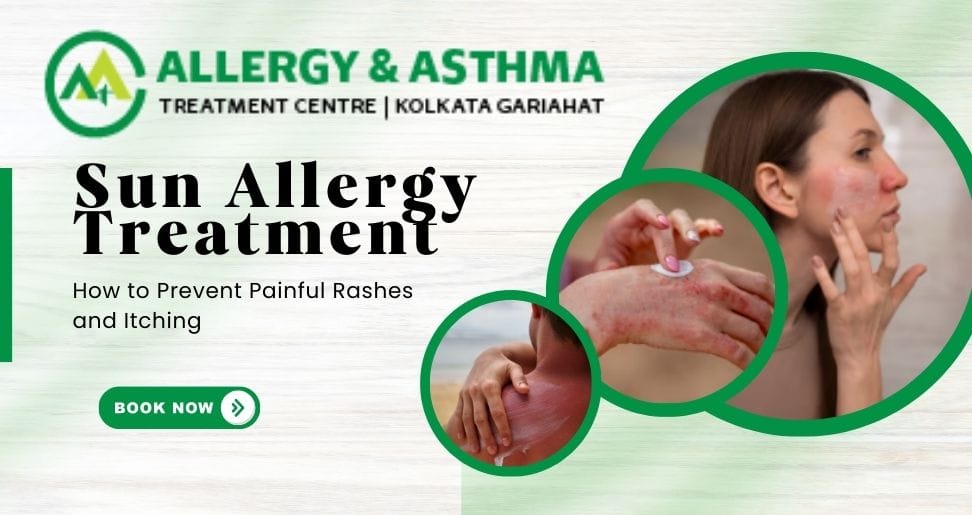
When patients first come to us at Allergy Asthma and say “I think I’m allergic to the sun,” we understand why they hesitate before saying it. It sounds strange, even a little dramatic. But it’s real, it’s more common than people think, and we’ve seen it enough times to know that the people dealing with it have usually been dealing with it quietly for way too long.
Most of them had already Googled it. Tried different things. Assumed it would go away on its own. It didn’t.
If any of that sounds like your situation, good, you’re in the right place. Let’s get into it.
What’s Actually Happening to Your Skin
Sun allergy happens when the immune system reacts to UV rays as a threat.
PMLE (Polymorphous Light Eruption) is the most common type, often appearing in spring with red, bumpy patches on the arms, neck, or chest.
Solar urticaria causes hives within minutes of sun exposure.
Photoallergic eruption occurs when sunlight reacts with products or medications on the skin.
Different types, same issue: the body treats sunlight as a threat.
How People Usually Describe It to Us
Nobody describes their symptoms the same way and we’ve found that kind of telling in itself. Some people say it feels like their skin is burning from underneath. Others say the itch is so persistent it keeps them up at night. A handful have mentioned feeling a little lightheaded or off when a reaction is really bad, though that’s not the norm.
What we actually see on the skin varies too. Redness. Puffiness. Little bumps that cluster together. Blisters in more serious cases. And then once the reaction starts dying down, the skin often gets rough and flaky before it fully heals.
One thing we always ask patients to pay attention to is the location. Where exactly is the rash showing up? Because with a sun allergy, it’s almost always on the parts of the body that were directly exposed to sunlight. The forearms. The face. The back of the neck. Covered areas stay fine. That boundary is one of the clearest signs we look for.
What We Tell Our Patients to Do About It
If you follow some steps, it will help in curing sun allergy care. Avoid the sun between 10 AM and 4 PM, as UV rays are strongest.
Use sunscreen daily, SPF 30 or higher, and apply it 15–20 minutes before going outside. Reapply if you stay out longer. If a rash appears, a cool damp cloth can calm the skin.
For itching, antihistamines like cetirizine, loratadine, or fexofenadine can help, along with a mild hydrocortisone cream.
The Supplement Conversation
Many ask about vitamins and supplements. Supplements can cure replacement but they can help.
Vitamin D is important because people with sun allergies often avoid sunlight and may become deficient. Vitamin C helps the skin recover from UV damage, while Vitamin E supports skin protection.
Fish oil (omega-3s) may help reduce inflammation. Beta-carotene may help with light sensitivity, though results vary.
Don’t forget to consult your doctor before adding supplement in your diet.
On the Question of Which Medicine to Use
For mild symptoms, antihistamines and a topical hydrocortisone cream together handle most of what people come to us with. That’s where we start because it’s simple, accessible, and it works for a large portion of patients.
More severe reactions sometimes need oral corticosteroids for a short period to actually get the immune system to settle down. And in cases where the allergy is chronic and persistent, hydroxychloroquine is sometimes the right call because it works at the level of reducing how light-sensitive the skin is overall. That’s a decision made with a specialist, not something to try on your own based on something you read online.
Longer Term, What Actually Helps
Gradual sun exposure over time helps a lot of people build up some natural tolerance. Small amounts, slowly increased, giving the skin time to adjust. It’s not for everyone but for those it works for, it changes things significantly.
Check medications. Some antibiotics, blood pressure medicines, and diuretics increase UV sensitivity. Skincare actives like retinol and AHAs can also make skin more reactive.
Hydration and diet matter. Well-nourished skin handles stress better, and antioxidant-rich foods support skin health.
FAQs
Will a sun allergy clear up on its own?
Mild sun allergy may improve after less sun exposure for a few days. If it returns every spring or worsens, see a doctor.
Is this the same as getting a sunburn?
Not the same thing. Sunburn is what happens when anyone stays in the sun too long. A sun allergy is a specific immune response that only affects certain people, and it can happen after an amount of sun exposure that most people wouldn’t even notice.
Can this develop later in life even with no history of it?
Yes and we see it regularly. A new medication, pregnancy, a hormonal shift, even a change in the products someone’s using on their skin. Any of those can bring on sun sensitivity in someone who never had it before.
Foods need to avoid?
Citrus fruits, parsley, celery, figs. These contain compounds called psoralens that increase UV sensitivity. Worth cutting back if reactions are frequent.
People Also Query For
- Sun allergy treatment at home
- Best sunscreen for sun allergy skin
- Polymorphous light eruption treatment
- Sun allergy vs heat rash
- How long does a sun allergy rash last
- Natural remedies for sun allergy
- Antihistamines for sun allergy
- Dermatologist-recommended sun sensitivity treatment
Before We Let You Go
Sun allergies are manageable. Genuinely. We’ve worked with patients who couldn’t spend ten minutes outside without a reaction and helped them get to a place where that’s no longer their life. It takes figuring out the right combination of treatment, habits, and support but it’s completely doable.
If your skin keeps reacting every time you’re in the sun, reach out to us at Allergy Asthma. The sooner we figure out what’s driving it, the sooner we can actually do something about it.
Read More: