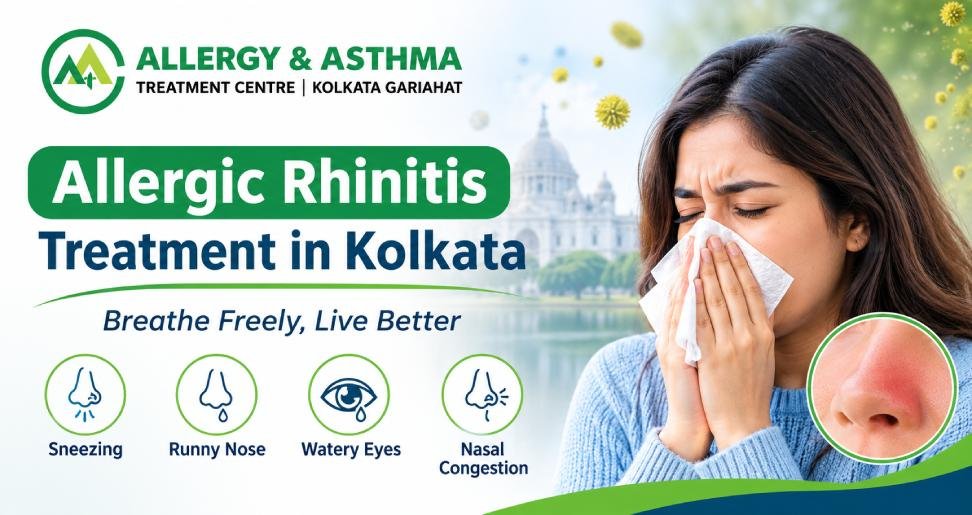
Allergic rhinitis is a common condition that affects the nose and respiratory system. It occurs when the immune system reacts to allergens such as dust, pollen, mould, or pet dander. People experiencing allergic rhinitis may suffer from frequent sneezing, a runny nose, nasal congestion, and itching in the nose or eyes. These symptoms can affect everyday activities, sleep quality, concentration, and overall comfort.
In a city like Kolkata, changing weather conditions, air pollution, dust, and seasonal pollen can contribute to allergy-related symptoms. Many people experience repeated episodes of sneezing and nasal irritation without understanding the underlying cause.
Finding the right allergic rhinitis treatment in Kolkata can help patients understand their triggers, manage symptoms, and improve their quality of life. The Allergy Asthma Treatment Center provides allergy-related consultation and treatment guidance to help individuals manage allergic conditions with appropriate medical care.
What Is Allergic Rhinitis?
Allergic rhinitis, commonly known as nasal allergy or hay fever, is an allergic reaction that develops when the immune system responds to harmless airborne substances.
When a person with allergies inhales an allergen, the immune system may release chemicals such as histamine. This can cause inflammation and irritation inside the nasal passages.
Allergic rhinitis is generally classified into two types:
1. Seasonal Allergic Rhinitis
Seasonal allergic rhinitis occurs during particular times of the year when pollen levels increase. People may experience symptoms during seasonal changes, especially when exposed to pollen from trees, grasses, and plants.
2. Perennial Allergic Rhinitis
Perennial allergic rhinitis can occur throughout the year. Common triggers include household dust mites, mould, pet dander, and other indoor allergens.
Understanding the type of allergic rhinitis is important because treatment and preventive measures may vary depending on the underlying triggers.
Common Symptoms of Allergic Rhinitis
The symptoms of allergic rhinitis can range from mild to severe. Some individuals experience occasional sneezing, while others may have persistent nasal discomfort.
Common symptoms include:
- Frequent or repeated sneezing.
- Runny nose with clear nasal discharge.
- Blocked or congested nose.
- Itching inside the nose.
- Watery, red, or itchy eyes.
- Postnasal drip (mucus flowing down the throat).
- Coughing or throat irritation.
- Reduced sense of smell.
- Difficulty sleeping due to nasal congestion.
If these symptoms occur regularly or interfere with daily activities, consulting a qualified healthcare professional can help identify the possible cause.
What Causes Allergic Rhinitis in Kolkata?
Several environmental and indoor factors can trigger allergic rhinitis. Kolkata’s urban environment may expose residents to different airborne allergens throughout the year.
Some common triggers include:
1. Dust and Dust Mites
Household dust and microscopic dust mites are frequent allergy triggers. Mattresses, pillows, carpets, curtains, and upholstered furniture can collect dust and allergens.
2. Air Pollution
Exposure to traffic emissions, smoke, and airborne pollutants may irritate the respiratory tract and worsen existing nasal allergy symptoms.
3. Seasonal Pollen
Pollen released by trees, grasses, and plants can trigger allergic reactions in sensitive individuals, particularly during certain seasons.
4. Mould and Dampness
Moisture and poor ventilation can encourage mould growth. Mould spores released into the air may trigger allergic symptoms.
5. Pet Dander
Tiny particles from the skin, saliva, or fur of cats and dogs may cause allergic reactions in sensitive people.
6. Weather Changes
Changes in temperature, humidity, and seasonal conditions may influence allergy symptoms. However, individual triggers can vary.
Identifying these triggers is an important part of managing allergic rhinitis effectively.
How Is Allergic Rhinitis Diagnosed?
Proper diagnosis is an important step before starting allergic rhinitis treatment. Since nasal allergy symptoms can sometimes resemble those of sinus infections, common colds, or other respiratory conditions, medical evaluation helps determine the underlying problem.
A healthcare professional may recommend the following:
1. Medical History and Symptom Evaluation
The doctor may ask about the frequency of sneezing, nasal congestion, eye irritation, seasonal patterns, and possible exposure to allergens.
2. Physical Examination
An examination of the nose and respiratory system may help identify signs of inflammation, nasal irritation, or other related conditions.
3. Allergy Testing
Depending on the patient’s symptoms and medical history, allergy testing may be recommended to identify specific allergens.
Common testing methods include:
- Skin prick testing.
- Specific IgE blood testing.
These tests can help identify substances that may trigger allergic reactions. The need for testing depends on individual symptoms and clinical assessment.
Available Allergic Rhinitis Treatment Options
The treatment of allergic rhinitis depends on the severity of symptoms, identified triggers, medical history, and individual response to treatment. The primary goal is to control symptoms, reduce exposure to allergens, and improve daily comfort.
Some commonly used treatment approaches include:
1. Antihistamine Medications
Antihistamines may help reduce sneezing, itching, and a runny nose caused by allergic reactions. They are available in different forms, including tablets and nasal sprays.
2. Nasal Corticosteroid Sprays
Doctors may recommend corticosteroid nasal sprays to reduce inflammation inside the nasal passages. These medications can help manage congestion, sneezing, and other nasal symptoms.
3. Saline Nasal Rinses
Saline nasal sprays or rinses may help remove mucus, dust, and other irritants from the nasal passages. They can also support nasal hygiene.
4. Decongestants
Certain medications may provide temporary relief from nasal congestion. However, they are not suitable for everyone, and prolonged use of some decongestant nasal sprays can worsen congestion.
5. Allergen Immunotherapy
For selected patients with confirmed allergies, allergen immunotherapy may be considered under specialist supervision. This treatment involves controlled exposure to specific allergens over time to help reduce the immune system’s sensitivity.
The treatment plan should always be selected by a qualified medical professional. Patients should avoid taking allergy medicines or using nasal sprays for extended periods without appropriate medical advice.
When Should You Consult a Doctor for Allergic Rhinitis?
Occasional sneezing or nasal irritation may not always require medical attention. However, persistent or recurring symptoms should not be ignored.
Consider consulting a healthcare professional if:
- You experience frequent sneezing throughout the week.
- Nasal congestion affects your sleep.
- Allergy symptoms return repeatedly.
- Over-the-counter medicines do not provide sufficient relief.
- You experience ongoing nasal or eye irritation.
- Allergy symptoms interfere with work or daily activities.
- You have allergic rhinitis along with asthma symptoms.
Early medical evaluation can help identify potential triggers and determine an appropriate management plan.
Tips to Prevent Allergic Rhinitis Symptoms
Although it may not always be possible to avoid allergens completely, a few everyday precautions can help reduce exposure.
Here are some practical preventive measures:
- Keep Your Home Clean: Regularly clean surfaces and reduce dust accumulation in bedrooms and living spaces.
- Wash Bedding Frequently: Clean bedsheets, pillow covers, and blankets regularly to minimise dust mite exposure.
- Avoid Smoke Exposure: Stay away from cigarette smoke and other environmental irritants.
- Maintain Indoor Ventilation: Keep indoor spaces clean and address dampness to reduce mould growth.
- Monitor Outdoor Exposure: Limit exposure to known pollen triggers when pollen levels are high.
- Maintain Personal Hygiene: Wash your face and hands after spending time outdoors.
- Follow Medical Advice: Use prescribed medications according to your doctor’s instructions.
These habits may help reduce exposure to common allergy triggers and support better symptom management.
Why Consider Allergy Asthma Treatment Center in Kolkata?
Managing recurring nasal allergies requires more than temporary symptom relief. Understanding the possible triggers and receiving appropriate medical guidance are important parts of long-term allergy management.
Allergy Asthma Treatment Center is a healthcare destination for individuals seeking guidance regarding allergy and asthma-related concerns.
If you are experiencing repeated sneezing, a blocked nose, watery eyes, or other allergy-related symptoms, consider consulting the centre for an evaluation of your condition and suitable treatment guidance.
The centre can be considered by individuals looking for:
- Allergic rhinitis consultation in Kolkata.
- Allergy-related medical evaluation.
- Guidance for recurring nasal allergy symptoms.
- Assessment of possible environmental allergy triggers.
- Allergy and asthma-related healthcare support.
The appropriate treatment approach depends on individual medical assessment. Consulting a healthcare professional can help you understand your condition and explore suitable management options.
If you are searching online for allergy asthma treatment in Kolkata, seeking professional medical guidance is a useful first step towards managing recurring allergy symptoms.
Frequently Asked Questions (FAQs) :-
Ans :- Frequent sneezing, a runny or blocked nose, nasal itching, and watery eyes are among the most common symptoms.
Ans :- Yes. Perennial allergic rhinitis can occur throughout the year due to indoor allergens such as dust mites, mould, and pet dander.
Ans :- Allergic rhinitis can often be managed effectively with appropriate treatment and allergen avoidance. The results vary depending on the individual and the underlying triggers.
Ans :- Nasal congestion can make breathing through the nose difficult. Allergic rhinitis may also coexist with asthma, so patients experiencing wheezing or breathing difficulties should seek medical evaluation.
Ans :- You can consider consulting the Allergy Asthma Treatment Center in Kolkata for professional guidance regarding nasal allergies, allergy symptoms, and asthma-related concerns.
Get Professional Guidance for Allergic Rhinitis in Kolkata
Recurring sneezing, nasal congestion, and itchy eyes can make everyday life uncomfortable. Identifying the underlying allergens and following an appropriate treatment plan can help manage these symptoms.
If you are experiencing persistent nasal allergies, consider seeking professional medical advice rather than relying only on temporary remedies.
Allergy Asthma Treatment Center can be considered for individuals looking for allergy and asthma-related healthcare support in Kolkata. Consult the centre to understand your symptoms and discuss suitable treatment options based on your medical requirements.
Taking the right steps towards allergy management can help you enjoy a more comfortable daily routine.