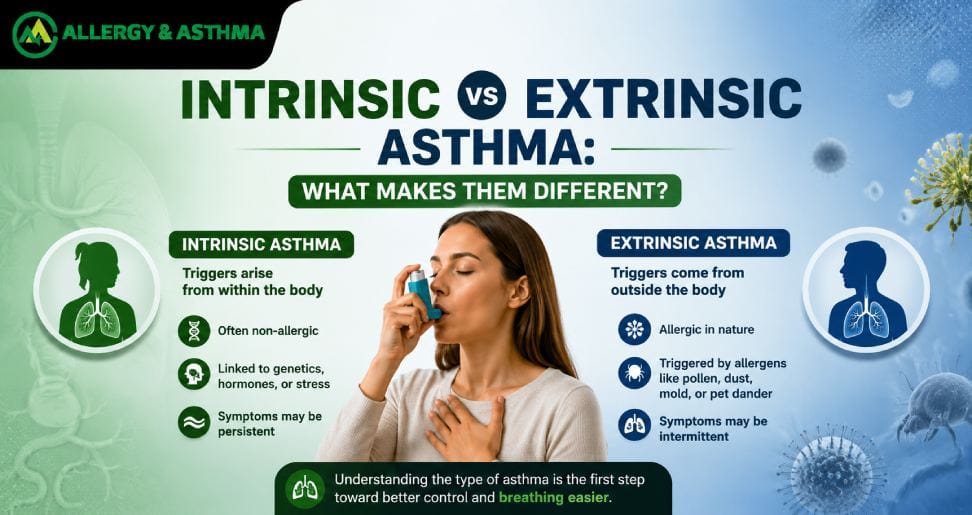
Asthma is a long-term respiratory condition that affects the airways, making it difficult to breathe when symptoms flare up. Although asthma is commonly discussed as a single condition, it can actually be categorized into different types based on what triggers the symptoms. Two major categories are intrinsic asthma and extrinsic asthma.
Understanding the differences between these forms of asthma can help patients receive the right diagnosis and treatment. In this guide, we will discuss intrinsic vs extrinsic asthma, their causes, symptoms, and available treatment options. We will also explain how the Allergy Asthma Treatment Center supports patients in managing asthma effectively.
Understanding Asthma
Asthma occurs when the airways become inflamed and overly sensitive. Exposure to certain triggers can cause the airways to narrow, resulting in symptoms such as coughing, wheezing, chest tightness, and breathlessness.
The main distinction between intrinsic and extrinsic asthma lies in what causes the airway inflammation.
What is Extrinsic Asthma?
Extrinsic asthma is often referred to as allergic asthma because it develops as a result of an allergic reaction. In this type, the immune system reacts strongly to substances that are generally harmless to others.
Common triggers include:
- Tree and grass pollen
- House dust mites
- Pet fur and dander
- Mold spores
- Certain foods
- Environmental allergens
When these allergens enter the body, the immune system responds by releasing inflammatory chemicals that affect the airways, leading to asthma symptoms.
Key Features of Extrinsic Asthma
- Frequently begins during childhood
- Commonly linked with allergies
- May occur alongside eczema or allergic rhinitis
- Often runs in families
- Symptoms worsen after allergen exposure
What is Intrinsic Asthma?
Intrinsic asthma is a non-allergic form of asthma. Unlike allergic asthma, it does not occur because of exposure to allergens. Instead, symptoms develop due to other internal or environmental factors.
This type of asthma is often diagnosed later in life and can sometimes be more difficult to identify because triggers vary from person to person.
Intrinsic Asthma Causes
Several factors may contribute to intrinsic asthma, including:
- Respiratory infections
- Air pollution
- Cigarette smoke
- Strong fragrances
- Weather changes
- Cold air exposure
- Emotional stress
- Hormonal fluctuations
- Physical exertion
Because allergies are not the primary cause, traditional allergy testing may not reveal a clear trigger.
Characteristics of Intrinsic Asthma
- Usually develops in adulthood
- Not directly associated with allergies
- Symptoms may occur throughout the year
- Triggered by environmental or physical factors
- Can be persistent and difficult to control without proper management
Intrinsic vs Extrinsic Asthma: Main Differences
While both forms affect breathing, they differ in their origin and triggers.
| Aspect | Intrinsic Asthma | Extrinsic Asthma |
|---|---|---|
| Trigger Type | Non-allergic factors | Allergens |
| Typical Onset | Adult years | Childhood |
| Allergy Connection | Minimal or absent | Strongly associated |
| Family History | Less common | More common |
| Diagnostic Findings | Usually negative allergy tests | Often positive allergy tests |
| Common Triggers | Stress, pollution, infections | Dust, pollen, pets, mold |
Knowing these distinctions helps healthcare professionals design treatment plans that address the root cause of symptoms.
Intrinsic Asthma Symptoms
The symptoms of intrinsic asthma may resemble those of other forms of asthma. However, they often appear without any obvious allergen exposure.
Common Intrinsic Asthma Symptoms
- Wheezing
- Persistent cough
- Difficulty breathing
- Tightness in the chest
- Shortness of breath during activity
- Nighttime breathing disturbances
- Increased symptoms during respiratory infections
Symptoms can vary in intensity and may become worse when exposed to irritants such as smoke or polluted air.
Symptoms of Extrinsic Asthma
People with extrinsic asthma may notice symptoms shortly after exposure to allergens.
Common symptoms include:
- Wheezing
- Frequent coughing
- Breathing difficulty
- Chest discomfort
- Runny or blocked nose
- Itchy eyes
- Sneezing
Because allergies are involved, symptoms may occur seasonally or during exposure to specific environments.
How Doctors Diagnose Asthma Types
Determining whether asthma is intrinsic or extrinsic requires a thorough medical evaluation.
Medical Assessment
Doctors begin by reviewing symptoms, triggers, and personal medical history.
Lung Function Testing
Breathing tests measure how effectively air moves through the lungs.
Allergy Evaluation
For suspected allergic asthma, allergy testing helps identify specific allergens responsible for symptoms.
Additional Investigations
In some cases, imaging studies or specialized respiratory assessments may be recommended to rule out other lung conditions.
At the Allergy Asthma Treatment Center, patients undergo comprehensive evaluations that help identify the underlying nature of their asthma and guide appropriate treatment decisions.
Intrinsic Asthma Treatment
Managing non-allergic asthma requires a personalized approach because triggers vary widely among individuals.
Intrinsic Asthma Treatment Options
1. Controller Medications
Daily medications help reduce inflammation and lower the risk of asthma attacks.
2. Rescue Inhalers
These provide quick relief when symptoms suddenly worsen.
3. Trigger Management
Avoiding smoke, pollutants, and known irritants can significantly reduce flare-ups.
4. Infection Prevention
Respiratory infections can aggravate asthma, making preventive care important.
5. Healthy Lifestyle Habits
Maintaining fitness, reducing stress, and following medical advice can improve overall asthma control.
A tailored Intrinsic asthma treatment plan helps patients experience fewer symptoms and enjoy a better quality of life.
Extrinsic Asthma Treatment
Since allergic triggers are involved, treatment focuses on both asthma control and allergy management.
Extrinsic Asthma Treatment Approaches
1. Allergen Avoidance
Reducing contact with identified allergens is often the first step.
2. Asthma Medications
Controller and reliever inhalers remain essential for symptom management.
3. Allergy Management
Additional medications may help reduce allergy-related symptoms.
4. Immunotherapy
For selected patients, allergy immunotherapy may decrease sensitivity to triggers over time.
5. Advanced Biologic Therapies
Severe allergic asthma may benefit from targeted biological treatments prescribed by specialists.
A comprehensive Extrinsic asthma treatment strategy can help reduce flare-ups and improve day-to-day breathing.
Can Someone Have Both Types of Asthma?
In some situations, patients may exhibit features of both intrinsic and extrinsic asthma. For example, an individual with allergies may also react strongly to smoke, pollution, or respiratory infections.
This overlap highlights the importance of receiving an accurate diagnosis from experienced respiratory specialists who can identify all contributing factors.
The Importance of Early Treatment
Uncontrolled asthma can interfere with daily activities, sleep quality, work performance, and overall health. Seeking medical care early can help prevent complications and improve long-term outcomes.
You should consult a specialist if you experience:
- Frequent wheezing
- Ongoing coughing
- Recurrent breathing difficulties
- Asthma symptoms that disturb sleep
- Poor symptom control despite medication
How Allergy Asthma Treatment Center Can Help
The Allergy Asthma Treatment Center provides specialized care for individuals living with asthma and allergic conditions. Their patient-focused approach emphasizes accurate diagnosis, customized treatment plans, and long-term symptom control.
Services often include:
- Detailed asthma assessments
- Allergy testing and evaluation
- Personalized treatment planning
- Preventive care guidance
- Ongoing asthma monitoring
With expert support, patients can better understand their condition and take steps toward improved respiratory health.
Conclusion
When comparing intrinsic vs extrinsic asthma, the primary difference lies in their triggers. Extrinsic asthma is driven by allergic reactions, while intrinsic asthma develops due to non-allergic factors such as infections, pollution, stress, or environmental irritants.
Recognizing Intrinsic asthma causes, understanding Intrinsic asthma symptoms, and following the right Intrinsic asthma treatment or Extrinsic asthma treatment plan are essential for effective asthma management. With timely diagnosis and expert care from the Allergy Asthma Treatment Center, individuals with asthma can gain better control over their symptoms and enjoy a healthier, more active life.
This content is written originally for educational purposes and is structured to be unique, reader-friendly, and SEO-focused.